Compete Word Redwork Embroidery: A Designer's Review
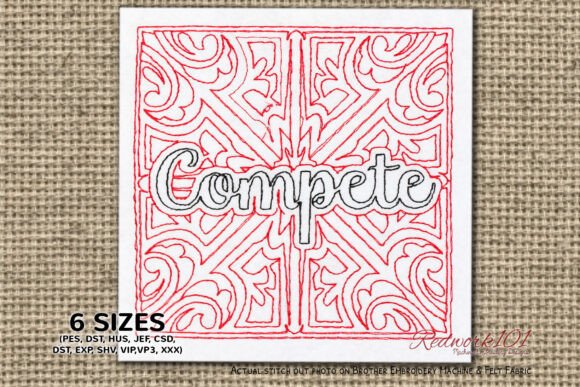
As an experienced embroidery designer preparing for a busy weekend craft fair, I spend hours evaluating digital assets before they ever touch my machine. Today, I am reviewing the Compete Word Redwork Embroidery design to determine its potential as a top-selling item in my handmade market booth. The product description highlights a stylish, symmetrical geometric redwork design featuring the word "Compete" centered within a powerful mandala. It is marketed as an inspirational piece perfect for athletic themes, but does it truly translate from a screen to a physical product that customers will want to take home?
First Impressions and Visual Appeal
The moment I viewed the Compete Word Redwork Embroidery, the aesthetic was immediately striking. The term "redwork" suggests a classic, single-color aesthetic, likely utilizing a vibrant crimson or deep red thread against a neutral background. This creates a bold, high-contrast look that stands out even from across a crowded vendor table. The symmetrical mandala structure provides a sense of balance and elegance, while the central placement of the word "Compete" delivers a message of strength and motivation.
In the context of a craft fair, this design feels both modern and timeless. It avoids being overly cute or whimsical, instead leaning into a premium, motivational vibe. For an Etsy seller or boutique maker, this is a crucial distinction. Customers looking for gym gear, running apparel, or motivational home decor are often seeking designs that feel empowering rather than decorative fluff. The geometric nature of the mandala ensures the design looks sharp and clean, which is essential for maintaining a professional brand image.
Product Versatility: From Totes to Aprons
The true test of any machine embroidery design is its adaptability across various handmade products. I envision this design thriving on several key items in my inventory:
- Tote Bag Design: Placing the Compete Word Redwork Embroidery on a canvas tote bag creates a functional yet inspiring accessory. The symmetry of the mandala works beautifully as a large focal point on the front panel, making it a standout piece for shoppers carrying their goods around the fair.
- Apron Embroidery: For the kitchen enthusiast or the baker selling at the market, this design adds a serious touch of personality to a work apron. The bold lettering reads well when centered on the bib area, turning a utilitarian garment into a statement piece.
- Tea Towel Embroidery: The redwork style is historically rooted in linens, so applying this to a flour sack towel or heavy cotton tea towel feels natural. The high contrast ensures the text remains legible even when the towel is folded or hanging in a display rack.
- Embroidered Patch: If the stitch density allows, this could be trimmed and finished as a high-quality patch for jackets or backpacks. The geometric border would frame the word perfectly, adding value to a small, giftable item.
- Caps and Pouches: While caps present a challenge due to curved surfaces, the mandala shape might accommodate the curve well if stitched with the right stabilizer. Small fabric pouches offer a safer bet for a smaller, accent version of the design.
The versatility of this embroidery file means it can serve as a centerpiece for a cohesive collection. Whether you are an Etsy seller creating mockups or a booth owner displaying physical samples, having a design that transitions smoothly from a large pillow cover to a small gift tag increases your production efficiency.
Production Practicality and Selling Points
When preparing for a craft fair, time is money. The Compete Word Redwork Embroidery appears to have a relatively straightforward structure compared to complex multi-color files. This simplicity is a major advantage for batch production. Since it relies on a single color (or potentially two for depth), I can set up the hoop, load the fabric, and run multiple units without constantly changing threads. This repeatability is vital for maximizing output during a long day of selling.
Photographing these items for online listings or social media will also be easier. The strong contrast between the red thread and the fabric creates a crisp image that translates well to digital screens. In a printable mockup, the design will pop, drawing the eye immediately to the word "Compete." This visual clarity is what drives clicks and conversions for small shop products.
However, we must consider the "at a glance" factor. Does the design hold up when viewed quickly? Yes, the mandala acts as a visual anchor. Even if a customer walks by in a hurry, the symmetry catches the light and the bold typography communicates the theme instantly. This makes it an excellent choice for a craft fair product where attention spans are short.
Careful Use Notes and Technical Challenges
Despite its strengths, there are specific areas where caution is required. As a designer, I know that not every design fits every surface perfectly. Here are the critical considerations for producing the finished product:
- Stitch Density: Mandalas often feature dense stitching in the center. I need to ensure the design does not pucker the fabric, especially on thinner materials like tea towels or lightweight cotton.
- Small Lettering: While the word "Compete" is likely large enough to read, I must verify the legibility of any fine details within the mandala arms. Tiny details can get lost if the thread count is too low or if the fabric texture is too rough.
- Fabric Texture: Textured towels or thick denim may hide the definition of the geometric lines. I recommend testing on the actual fabric intended for sale to ensure the thread colors remain distinct.
- Curved Surfaces: For commercial embroidery on caps, the curvature of the hat might distort the symmetry of the mandala. A flat cap front is ideal; a curved brim might require significant repositioning.
- Dark Fabric: Standard redwork is designed for light backgrounds. If I wish to use dark fabrics, I must plan for a backing layer or a contrasting thread color to maintain visibility.
Designer's Checklist for Production
Before I commit to mass-producing items for the weekend market, I follow a strict protocol to ensure quality. First, I always test the design on scrap fabric to check the hoop size and alignment. I inspect the stitch density closely to ensure there are no gaps or excessive bulk. Using the correct stabilizer is non-negotiable; for a design with this much geometric detail, a cut-away stabilizer is usually necessary to prevent distortion.
I also create at least one real mockup to see how the lighting affects the thread sheen. Finally, I double-check the design assets and confirm commercial licensing terms. Many digital embroidery files have restrictions on how many finished items can be sold. Ensuring I have the proper rights protects my business and respects the original creator.
Final Verdict for Craft Sellers
The Compete Word Redwork Embroidery is a compelling addition to any artisan's toolkit. Its blend of Inspirational messaging and geometric precision makes it a strong candidate for athletic-themed merchandise and motivational home goods. It offers a premium look that elevates simple items like aprons and tote bags, increasing their perceived value. By carefully managing production variables like fabric choice and stabilizer usage, sellers can create a line of products that not only look beautiful but also sell effectively in competitive handmade markets.
For the creative entrepreneur ready to launch a new collection, this design offers a solid foundation. It balances artistic appeal with practical production needs, making it a smart investment for those looking to expand their embroidery offerings with confidence.